Monday, January 19, 2015

The art of turning tragedy into triumph

Towards the end of 2014, I fell severely ill to the point that I was admitted at Mulago national referral hospital for a period of two weeks, the longest I have been in a hospital (so far).
As I went through the painful process of being pricked over and over again, the doctors discovered that my kidneys were performing at about 5%, which earned me the diagnosis of Kidney failure. 

It was rather depressing news to receive, for me, my family and friends. Going through the counseling sessions which educated me on the implications of the diagnosis, I kept reminding myself to find the silver lining, which I believed existed.

"Its been a tough few weeks with my health. I am grateful for my parents that have been exceptionally caring, loving and patient. Thanks to dad for driving me in and out of hospital at wee hours of the night. And mum who is nursing me back to recovery. I’m also overwhelmed by the love and support I received from family and friends who have demonstrated through deed and words that no man is an island. I now realize I am a very blessed man because through this low point in the stillness of my thoughts I have reached a deeper understanding of myself and the world around me.‪#‎grateful‬" - Facebook status update January 2nd 2015.

Waiting for my dialysis session early in the morning. I do that a lot now (waiting)
Undergoing a dialysis session which I religiously attend twice a week.
Its almost coming to a month since I was discharged and to be honest it has been a bit of struggle to adjust to the new lifestyle which I have to live by in order to stay healthy but through it all I have experienced moments of happiness and joy, thanks to my supportive family and friends who are taking this journey with me.

I realize that, in the end we must play the hand that life deals us and that our life experiences make us who we are. Call it life.


      Wake up. Suit up. Show up. That’s how you turn tragedy into       triumph. ‪#‎Keep‬-Waking

Tuesday, January 13, 2015

5 tips to work your way out of a dark place

It’s true what they say, that life is not an upward trajectory. Every now and then we find ourselves living in dark places; mentally, emotionally, spiritually and in all other aspects of life that can possibly go wrong. As an entrepreneur, I find myself there every so often. 

Sometimes in the middle of a risky venture, I am at my worst mentally and emotionally. One study I read described entrepreneurs as one of the most mentally unstable people. Its like riding a killer whale; Onlookers commend for your confidence for taking the risk but in truth, the entrepreneur is terrified to death, wondering how on earth he got there in the first place.

In May 2014, I walked out on my PR job to pursue my entrepreneurial dreams; to build  Xibra Digital & creative. Soon I found myself in a dark place because I was wondering if I had made the right choice after weighted what my PR career could have panned out to be. It wasn't until after three months that I knew for certain it was the best decision of my life (so far). Looking back on what I went through to get here; a better place, below are the five lessons that I can pass on to help anyone who might be in a similar position. Cheer up, things will get better.

Keep calm and call dad or a mentor or anyone older
While most of my peers believed that I had made a wrong bet, talking to my mentor Mark and my Dad proved that even though at the time, it didn't seem like it; the decision I made to leave my job was the right one.
The adage that older is wiser holds true and I have found wisdom in sharing my fears and disappointments with older people I hold in high regard. You will be surprised how calm they will be as you narrate your ordeal. Their nuggets of wisdom that usually follow are usually reassuring. Talking to someone who has probably been where you are is one of the first places you want to try as you try to answer the question of 'what next.'

Take time off
I quit my job late May and I decided to take the summer off since I had not gone on a vacation since graduating from University two years earlier. It’s hard to take vacation days when you are busy working to earn one pay check to the next in order to keep up with the bills. I realized that, to take time off without worrying about bills, I needed to move back in with my parents, which was not the best place in the world I desired to be, however the idea of a couple of months of no work and hustle free rent outweighed the desire for freedom. And that’s what I did. But before did, I spent three weeks in my apartment planning the entrance and exit strategy, which gave me a sense of how much harder I had to work each week and month in order to move out in the time I had set for myself.

Just a word of advise, getting back in the game may prove to be a lot harder than you may anticipate. So think long and hard before you make the decision to take a long period off because there might not be a job or work to come back to when the break is over. In my situation it worked well because I was changing direction in my career all together,so the break proved more helpful because I got the time to re-educate myself and create a new network of people I needed in order to accomplish my company's goals.

Your twenties is the best time to take a few risks and if this means taking time off to rethink your life's plan, you owe it yourself to search the depth of your soul to find out what makes you tick, what gets you out of your bed each morning and everything else in between.

Let go of the notion of who you are and reinvent yourself
When one door in life closes, it is natural at first to stare at it for far too long that we fail to recognize the opportunities that are right in front of us in our current situation. This is usually caused by the fear of letting go of the known while trying to embrace the unknown. But you possibly cannot discover new lands without the courage of losing sight of the shore.
A month after quitting, unemployment and depression soon became very real that the thought of calling my former boss to request for my job back crossed my mind several times because I was suddenly scared of what life without an end of month Golf tournament was going to be like. However I started accepting where I was and focused more on who I wanted to become by the end of my break.
Growth is inward-outward so I started a re-brand of myself, starting with my mental attitude, reading everything I could about how to be a great entrepreneur. I realized that if I reached the end of my break and I hadn't learned a certain amount of new skills, I would be a failure by default because I would still be the same person.
Reinventing yourself made accepting who I was, easier each day. I Identified areas in my life where there was opportunity for growth and work towards achieving them. Soon the notion of entitlement to who I was slowly fade away which made life more interesting again.

Surround yourself with people who love you no matter what
The world is a cold harsh place and like Sylvester Stallone said, “No one hits harder than life.” I have found that when I am going through a dark period, I am not as fun-loving as when everything is okay with the world because difficult times are  a wake up call of sorts to remind us of just how cold and shrewd life can really be, which in turn makes us develop a cold outlook to life.
But going through this period made me realize that its far better to be a fun loving person than a judgmental jerk who complains about whats wrong with the world, regardless of the difficult circumstance I may be facing because I possibly have no clue to the kind of ish the other person may be dealing with.
By letting my family and friends be there for me, I have rediscovered happiness and I honestly feel like a very lucky guy to have people who have loved and accepted me for who I am at my worst.

Get up, Suit up and show up (get back on the horse)
The final step is no matter how shitty you feel, always dress well and show up to where you are supposed to be on time, which is the key to true reinvention. In the first two months, I took on every opportunity that came my way irrespective of the pay, and as a result I soon saw incremental improvement in work output for my company. Diligence pays off and when you do it often, opportunities present themselves. Two guiding quotes on this
“You cannot connect the dots looking forward. You have to trust that your dots will connect somewhere in your future” – Steve Jobs
“The harder and smarter you work, the luckier you get.” – Neil Gaiman

The most important thing is to get out of the dark place, as soon as you can because the longer you stay there, the harder and longer it will take for life to start happening to you  again.
Finally, Take time to reflect on why you got there in the first place and how you can avoid it in future; write your own blue print of advice. I was able to rediscover my passion for writing again through this blog and given a choice I never would have chosen to go through what happened  but like they say, “what doesn't kill you makes you stronger.”
The bottom line is that  I hard times helped me grow into a better business man and a better person altogether which is more important than everything in between. #Keep Moving and growing. It’s the secret to happiness.

Tuesday, December 2, 2014

How I made a million shillings in High School (short story)


Taken during the project


I made a million Uganda shillings straight out of high school in 2009. Ugx 1,000,000 ($400) may not seem like much, however the story of how I did so certainly is. It all started in November 2008, the period leading to my A’level final exams at Kako Senior Secondary School, Masaka.

Mr. Menya, the school cameraman was selling photographs he had taken of students as he usually did every weekend. As he flipped through his stack collection looking for mine, he landed on a bunch of awfully taken student headshots. When I inquired what they were for, he responded that they were intended for the school magazine.

Having had a brief history in photography and design, I was upset that the headmaster could allow such terribly taken photographs to appear in an important publication like the school’s first edition magazine.  At once,I rushed to talk to my classmate Bill who I figured knew something about the photographs since his headshot was among the collection and besides he was the president of the writers club which was working closely with administration to realize the magazine project that had stalled for a year.
Bill did know something. After explaining my point of view of why a magazine could not possibly have bad images, he posed the question, “why don’t we make the magazine?”


His idea was so big that it knocked the wind out of me and for about a minute there was complete silence. His idea sounded like a very good one but it possibly could have been a bad one as well. We discussed it more that night in Abraham’s private dorm room which he had shared with him. Our conversation went well into the night. Walking back to my dormitory, I was so excited about the idea even though it seemed less likely that the school would go for it.


L-R Rwakatungu Bill the media guy, Patrick Seruyange the money guy and Kanuma Abraham the muscle 

The following day Bill convinced Abraham, who was a student body chairman to join us for our meeting with the headmaster, Mr. Wamala, to put forth our interest in taking over the school magazine project. Maureen, a classmate who was the deputy president of the writers club and a straight A student, joined us. She made us look like we meant business.

After waiting in the secretary’s cranked office, which acted as a waiting room, we were called in.
Bill being the extrovert he is immediately got down to business, announcing our agenda, as the headmaster listened on. He then posed the question, “Why you?”

Immediately jumping into the conversation, I explained why it was important to me as an individual to have a well-produced magazine by what was soon to be my alumni matter, enlisting Bill’s publishing history to complement my photography skills. Mr. Wamala was not convinced but Abraham persuaded him to give us a chance. He then asked us to write a proposal which he was going to evaluate amongst other staff member concerned with the project.

I was actually surprised that he was willing to even consider the idea, given the fact that what we were about to do sounded like a lot of hot air.  We had never actually produced a magazine and didn't have a proven professional work record to back-up any of our claims.

While we thought through the proposal, it occurred to me that, though writing an air tight application would increase our odds of getting the contract, we needed to start acting immediately to demonstrate our focus and ability to get things done. As luck would have it, the school had just purchased a new school bus, an achievement that was attributed to Mr.Wamala who had been headmaster for less than a year. More importantly the handover ceremony was coming up in a few days. The headmaster had struck me as a man who cared about his image, which presented an opportunity to show off my photography skills.

I dashed to the phone booth to call Sadik, a good friend who had finished the year before. He had decided not continue to University and opted to stay in Masaka to help his Dad in his profitable hardware business. I requested him to lend me his digital camera to photograph the bus handover event, explaining that I had received an opportunity to design the school’s magazine, going further to explain how doing a good job on the project was the first step towards realizing “Ky-ika concepts,” the media company we dreamed of starting.He was hooked and he brought the camera the very next day. 


Ivan and I shared a deep appreciation for art and All star converse shoes


But perhaps the most important thing that Sadik did for me that day, was convincing Ivan who became our design artist for the project. He had been hesitant to join forces with Bill and me because he purely had no interest in under taking a school related activity. However Sadik was able to sway him into joining us by explaining its importance to “Ky-ika concepts” to which Ivan was going to be a member of.
The handover ceremony was as big and pompous as anyone could imagine and I captured it in its full glory. At the end of it, I rushed to Mr. Wamala’s office to show him the pictures I had taken. He was impressed by the quality and my sheer will to follow through with my plans. I could tell we were winning him over.
By mid-December 2008, we were all through with our final exams and were heading home for our long vacation. We dropped our proposal over and went our separate ways, promising to link up in the holidays if the school okayed the project.

Late February 2009, I received a unexpected call from Mr. Cramer, the teacher who was overall head of the project. He was asking me how soon I could be in Masaka to discuss the details of the assignment.
The following day, I was meeting with nearly the whole staff body to discuss how we were going to execute the design process. It was an intimidating moment addressing a staff body comprising of some teachers who held me in low regard due to the disciplinary rap sheet during in my student days. In the end it was agreed that my team and I were to come work from school.

After the meeting I walked to the Kako trading center which is a quarter mile away to find an available house to rent that my team and I could live in for the period we were going to work on the magazine. The only available house was an old depleted two roomed house. I made a deposit from the two hundred thousand I had received in advance and headed back to Kampala to plot our return.
As the day for travel drew closer, I started having doubts in the ability of myself and the team to deliver a high quality magazine as we had imagined and promised. The headmaster had taking a big bet letting rookies with no portfolio design the first edition of the magazine. There was a lot of pressure but my Dad just encouraged me to do my best. His advice seemed to help.

When we arrived, the gloomy house I had rented did not inspire the confidence of my colleagues and it took a lot of persuasion to get them to accept the living conditions. We used the first room at the entrance as a kitchen and slept in the next on bunker beds. It was not the ideal accommodation but we made due.
Early the following morning, all dressed in black, we invaded the school to start work. We were given a room on the main building complex to use as our office and one of the teachers who really hated my guts was assigned the duty of ensuring our morning tea was brought on time. Watching karma at work truly is amusing.
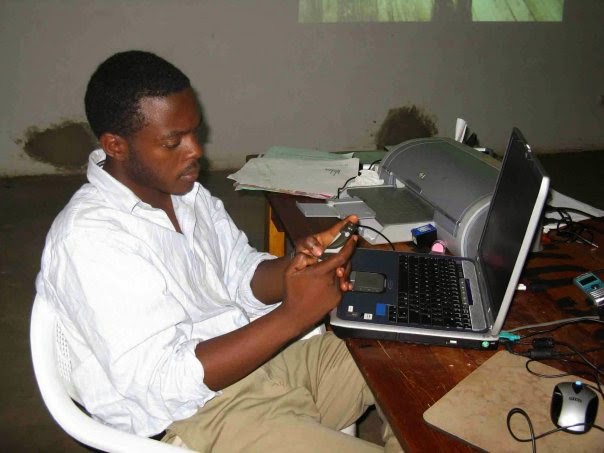

We worked our butts off to produce the magazine

We immediately started setting up. Collectively we had a projector, two digital cameras, a high resolution color printer, scanner, modem with wireless internet (the school didn’t even have a connection) three laptops and surround speakers. We were out to make an impression. 

But behind the impressive tech facade, our false confidence and larger than life verbal assurances, we had no idea what on earth we were doing. So we got to working to figure it out.Bill was in charge of editorial and lay out, Ivan was  the graphics Illustrator and  I was the photographer, layout designer and project leader.
Soon, the magazine project became the center of our existence. We lived, breathed, ate and dreamed the project. Initially when we started, we were motivated by the need and the desire to prove a point to the school that we were exceptional student-alumni. However going through the process of spending dozens of uninterrupted hours at an end to brain storm, write, edit, sketch,  design, illustrate, photograph, caption and lay into InDesign, one single page, broke us but also made us. Each step taken forward was refreshingly liberating but also frighteningly intimidating.

As we worked away, we were becoming increasingly aware of the fact that in every decision we took, we were by action accepting responsibility. Initially our outlook of the deal was; do a good enough job to make the students and school administration happy, so that we could get paid. It seemed like a simple enough plan but the one thing, however, that none of us could have accounted for was falling in love with what we were doing that led us to unlock our own individual potentials. And soon, we began to aspire and expect nothing less than the best from each other.

Slowly and carefully we started to produce page after page and soon we had 20 pages, half way. Up until that point we had worked for two weeks and neither the headmaster nor anyone else for that matter had a clue of what we were doing.
I created a PDF file and sent it to Bill and Ivan to proof read. Once they were satisfied with the content, we printed a color copy with the water marking, draft. I had worn a full suit that day for my afternoon meeting with the headmaster that had been scheduled for review and status. When we commenced work, we negotiated with Mr. Wamala to grant us complete creative control and working space for two weeks so that we could have the space and time to come up with a concept that we had promised. Being the micro-manager he was, he reluctantly accepted with the provision that we produced a draft copy within two weeks which would be the basis for discussion for the continuity of the project.
After the last page was out of the printer, Bill arranged and stapled the draft copy. Everything was riding on this. As I approached the administration building, I realized that everything we had said, done and worked on had come down to that decisive moment.

As soon as I walked in, Mr. Wamala jumped out of his chair in delight to greet me and said, “I can’t wait to see what you have to show me.” Without further hesitation, I handed him the well printed copy which he immediately snatched out of my hand. I took a seat in the sofa across from him, quietly observing his facial expressions with the faint hope of deciphering his thoughts. The room grew quiet as he flipped through the pages, occasionally lowering his face to steal a glance at me from under his reading glasses. When he was done, he put it down, took off the glasses, sat back in his swivel chair, looked thoughtfully at me, and then said, “Bravo. Continue with the work. Go to the bursar to collect your additional two hundred thousand for upkeep. The project continues.” I was so excited but didn't show it, suppressing my emotions so that I could maintain my composure.

When I got back to the office, Bill and Ivan were quietly working away, waiting for the verdict. I couldn't hold the excitement in any longer, “we are not going home yet,” I shouted.We had proved what we had set out to, which immediately gave each of us an insane level of unwarranted self confidence in each of our abilities.

Later that night as we talked right before bedtime like we always did, Bill floated the idea of traveling to Kabaale to his home where we would have an office to complete the project, since it was costing us a good amount to live and work in Masaka. Ivan needed a break from school and we had all earned the right to a rest. We decided to travel the following morning.

Early the next morning we said our farewells to our neighbors in the community who we had known for two weeks. Kalo (village) mates as we referred to them.The land lady was especially excited at seeing she had made a months’ worth of salary for half the time. I briefly left Bill and Ivan at the center as I dashed to school to wrap up a few administrative details and to also say my good byes to my younger friends, many of whom saw a mentor image in me. The tide for growth was blowing in a different direction and I was ready to set off for another adventure. I had a feeling that it was the last time I was ever going to feel welcome at Kako, knowing that in future I would be a guest.

Many of my friends, whom I had photographed while on the project, eagerly asked me when the magazine was going to be out so they could have a look at it themselves. I did not say.  For a brief moment I was sad that I was finally leaving the place that I had come to know as my fortress. Kako offered me the two most peaceful and wholesome years of my young life.

Quickly flashing back to May 2007 when I first arrived for my senior five, I could see I had made the right decision transferring from a private school in Kampala after only a term, because Kako offered me much more than just an education. At that moment I was filled with nothing but contentment and gratitude for the warm experience the community had shared with me while I was still a student and during the project. 

I hurried to catch up with Bill and Ivan who were excited about our road trip. As we waited for a bus bound for Kabaale from Masaka town, we were spotted by Bill’s friend who was driving a minivan and heading in our very destination. It was an assurance that we were heading in the right direction. It was the first time I was away from home and making such big decisions on my own. Even if the project had ended that every day, I would have still been very grateful for the life lessons I learned in the two weeks we lived in Masaka.
When we got to Kabaale, we briefly forgot about the work for a few days as we took time to explore the town Ivan and I had never been to. I soon received a call from a friend from Seroma Christian high school who wanted me to join them in Kabaale to record their journey on camera and produce a documentary at the end. When I told him I was already there, he couldn’t wait. I got the team to work together to produce the documentary which earned us extra spending cash. I had found my own little slice of paradise there.

A selfie with Kuteesa Cornelius and I in Kabaale. We studied O'level together from Seroma
 Just as I had started getting comfortable, I received a call from home informing me that my uncle’s wedding was in a few days and since I had pledged to shoot the event, I was needed immediately back. I had to cut my vacation short, leaving Ivan behind with Bill. We had barely designed a page for the magazine since leaving Kako but I agreed to design the rest on my own from Kampala. As I left, I wondered if the three of us would ever get another chance to work again like we had just done and most importantly if starting a company was in the cards for us.

After the wedding which was in May 2009, I got back to serious work to beat the July deadline. It was not the same without the two and the first two days were difficult, however I soon found my energy again and before I knew it, my room was littered with paper, mostly of articles and printed pages, a sign of progress and stress. After a good number of journey’sbetween Kampala and Masaka, I finally received the approval to go into printing in mid-July.

The headmaster connected me with the publisher who in turn sent me all over Nasser road, a famous place down town Kampala where all the printing action happens, to align all the necessary requirements for going into print which opened my eyes to key insights of the print industry that I never knew existed.
But it wasn’t all as rainbows and butterflies’. The days leading up to publishing were so difficult to the extent that on one of the days I walked from Nasser road to Kabalagala which is approximately 3 miles away because I had spent the money I had on paper. My social life was also put in the balance since the project had taken center stage in my life at the expense of those close to me. I expected my family and friends to understand however there is only so far I could stretch it and clearly I was burning the candle from both ends but none of it seemed to matter then. I was insanely driven to see the project completed that I barely ate or slept that whole week leading to the publication.
And then the moment came when I held the first copy in my hand, straight from the printer. As I flipped through the pages, I was overcome by happiness. It had had surpassed our expectation and everything we had been through during the project started to make rational sense. What mattered stuck with me like glue and what didn’t vanished into thin air.
11 PM that day, Timothy my friend help me load the two boxes that contained the copies onto the bus I was boarding to Masaka. I arrived at Kako at 2 AM and couldn’t sleep till morning when I handed over the magazine to the headmaster who in turn handed me a cheque of six hundred thousand (600,000/=) as reward for the three of us. Having received a total of four hundred thousand prior, the grand total was a Million shillings!

It has been six years since I sat my A’level finals or made my first million shillings. I am now a C.E.O of a startup, Xibra Digital which develops mobile applications for an Afrique-centric market. When I look back, I can now saywith more clarity that my decision to be an entrepreneur was inspired by the magazine project, whose experience has been invariable in my life and career. I learnt that the most vital ingredient for success of any venture lies in the synergy of the team.  Which is why, as a leader, it is extremely important for me to work with people who above all else are passionate, persistent and won’tlet anything standing in their way of pursuing excellence, least of all themselves.Success is nothing but consistent persistence.

It has not been an easy journey to get here, where I can say with more certainty that I know what I am doing and know what I want to do with my life, but for what it’s worth, the journey will always be the reward. Starting is the most important thing and with time, determination and the right people around you, the pieces of the puzzle will fall in place, much faster and effortlessly than you could imagine.
Have the courage to start something, the persistence to see it through and a level head to pick yourself up and have another go at it.

Tuesday, October 7, 2014

Acing marketing by answering 3 simple questions


                                                   1.
 What business are you in. No, really?


Nikon is not in business of selling cameras, they are in the business of helping people capture, store and share priceless life’s moments.
Nokia is not in the business of selling phones, they are in the business of connecting people
Bell Larger is in the entertainment business, not beer.

Before a company markets a product, a long and thoughtful process should go into defining who they are as a brand and what they stand for in order to determine their positioning in the market. A company with a good understanding of who they are, find is easier to develop a single minded marketing and communications approach in messaging.

Having a single minded approach towards a product or service helps to strike consistency across the brand experience timeline which in turn helps customers to see the brand in the same eyes as a company might. For example Coca-cola’s single minded approach is to “Inspire moments of optimism” which is why all their commercials have an embedded theme pointing towards happiness.

As a company they are obsessed with this proposition, to the extent that they ran a “happiness” vending machines campaign in select colleges in America, which rewarded students with random gifts like guitars, pizza etc. through the machine. Brining to life their single minded proposition by demonstrating how moments of optimism could be inspired every day.

 2.       Why are you doing it?


Google – organize the world’s information and make it universally accessible and useful. Starbucks – provide an uplifting experience that enriches people’s life.
Mastercard – making the life of E-commerce simpler.
Observing a cross section of industry giants, it is clear that the world’s most valuable brands have managed to sell the “why” factor so well to their customers that a purchase goes beyond the symbolism of a transaction to an expression of an experience.
Selling the why factor is more inspiring because it magnetizes consumers to your product not necessarily because of what you are selling but rather because the consumer wants to outwardly express that they share the same belief system as you. This explains why people are willing to spend way more money on an iPhone against other relatively high end affordable smartphones like Samsung.
 A classic example of this law in motion is how Martin Luther King led the human rights movement in America. He certainly wasn’t the best orator of the day or the only African America who had suffered oppression, however what he did right was communicating what he believed in, instead of communicating what needed to change in America like many activists before him had done. By doing so he was able to inspire people who believed in equality, who then took his cause and made it their own , so when 250,000 people showed up to hear his “I have a dream speech,” they didn’t show up for him, they did it for themselves as an expression of their beliefs.
Here is how Apple uses this concept to sell its products

“In everything we do, we believe in challenging the status quo, we believe in thinking differently - (Why). We do this by designing beautiful products that are simple to use and user friendly - (How/reason to believe). We just happen to have made an iPhone 6, want to buy one? (what/proposition)

3.       Are you ahead of your customer’s needs and wants

Thomas Edison didn’t perform a market study before inventing the light bulb

A great company should constantly be in the process of re-innovating and re-imaging the experience a consumer receives from a product which is why it is imperative to stay ahead of a customer’s wants and needs which are constantly shifting. So much so that the company is providing services that a customer may not even be aware that they need. Think of an iPod which led to the creation of iTunes.

An example of a company that failed at this is Kodak whose camera film sales dropped by 97% between 2002 - 2011 because they had failed to realize that their consumers where trading in their old film cameras for digital cameras which didn’t require a film. What if Kodak had invented the memory card?

Western Union could have been the mobile money of today however it’s too big of a chasm to cross from telegraph, to computer, to internet if you skipped telephone in the middle, which they did in an internal memo in 1896 dismissing it, describing it as “The telephone had too many shortcomings to be seriously considered as a means of communication. The device is inherently of no value to us.”

With the insight that every industry is prone to change, companies should be smart enough to go back to the drawing board every now and then to provide a better service and product experience for their customers whose tastes and preferences are constantly shifting too.  This also means that the real action is happening at the next curb. If your company is not

re-innovating itself, your competitor is. You never want to be caught with your pants down like the banking sector was by Mobile money which has forever changed the financial landscape as we knew it.

Friday, September 19, 2014

Why sacking Amama Mbabazi wasn't the smartest move


The President of Uganda today announced that Amama Mbabazi the now outgoing prime minster has been sacked, to be replaced by  Dr. Ruhakana Rugunda. Politically speaking this was a good move for the ruling party NRM because it eliminates a rumored running mate for 2016 elections.

However from a strategic point of view, it was not the best call because of these two simple reasons.

Unity is power

Ironically yesterday Scotland voted NO to slipping away from the U.K, which would have otherwise ended a 300 year union. History has taught us that it is far better to be in union with enemies than at dispute with old friends who have the potential to become a thorn. Without a doubt, the president and Amama have egos to nurture and Mbabazi is know for not taking his public image lightly, he demonstrated this when he  was paid for substantial libel damages from theDaily Mail, a British tabloid, over an article that alleged his “cronies” took £10m in foreign aid.

Which means his public throw out is likely not to settle well with him anytime soon, leading him to whatever course of action we speculate. There is a famous South African proverb "When you kill a snake, do not swing it in the air to show off because there might be others in the bush looking at you." Strategically speaking throwing Amama out might have sent the desired warning or message however it works counter to NRM because it is no secret that Amama had his supporters. The reason NRM has been able to rule this long is because of their unwavering unity to which the opposition cannot match.

For the sake of the party, a more subtle approach would have been more appropriate because give or take, it is now possible for Amama to make friends with NRM's enemies which isn't good for the ruling party or the country.

A powerful leader surrounds himself with powerful characters

Amama Mbabazi's rumored political ambitions must have caught the president off guard to the extent that the National Bank of Commerce, to which Amama had controling interest was shut down, to cut off the money supply. So at a certain level, there is no denying that Amama was an imminent threat in some way, however the way I see it, having strong and powerful people by your side is more effective than surrounding yourself with people you dominate. Because when that moment comes when your authority is in question, you need people around you that are willing to do whatever it takes to protect the status quo, than weak people who will quickly flip over for whoever comes a long with a new proposition. 
The true mark of a powerful leader is one who is able to manage a variation of temperaments on a team and the president's action to throw out Amama, might not have been the best move to that effect. And FYI Amama was not really a direct threat because he lacks one key ingredient to garner for the top seat, "Gusto" which the president clearly does.

Of course everything we know is based on speculation. Its hard to tell exactly what is going on behind closed doors. The major difference between Western and African democracy is, in the west, citizens believe the worst in their leaders which encourages them in turn to work towards pleasing their voters while in Africa, we believe the best in our leaders until they let us down which happens more often than not.
I guess the key take away from today's events is..... Life goes on.


Tuesday, September 9, 2014

What I have so far learnt about happiness

Carlos, my business partner has taught me that to discover happiness, you must train yourself each day to overcome the pain, hatred and anger that reside in our hearts. Two weeks ago as we worked on a project that was going horribly wrong already, my cellphone was snatched from me without noticing, as we walked down the busy streets of Kampala, Uganda.

Carlos interrupted the conversation to ask if I had my cell, on checking it was gone. Without hesitation, he instinctively ran back shouting “thieve” at some random guy, who to my surprise handed over the phone.

As we resumed our conversation, I told him how bad my day was, with a predicament of how much worse it could possibly get. Carlos smiled and said, “One way to look at it is, you've had an awesome day because I just helped you get back your phone.”

 A few minutes later, he put a coin into a beggars cup. When I asked him why, he responded “You see you have to be good to the world. Genuinely good without expecting a thing in return.”

Later that evening we found ourselves taking a tour around the majestic Old Kampala mosque that overlooks Kampala city. My current perspective to life at 5 pm; it was good.
Which was a huge shift in mental attitude over a time cycle of ten hours. As we sat in the courtyard talking about life and what makes us happy. I realized that Carlos is almost always genuinely happy because he constantly and consistently aspires for that state of mind, so much so that he never lets himself stay mad at anything for more than two minutes.

I have learnt that happiness does not require a situation before it happens. In truth we are likely to wind up miserable if our pursuit of it is limited to a reward of future value.


Sunday, August 10, 2014

Why it is important to empower children living with special needs with IT skills

Last week I run a PR campaign for KiBO foundation which had partnered with Cisco to provide 
IT training to five special needs schools within Kampala. The training I attended was at Mulago 
School of the deaf.

As the children followed the instructors sign language as he demonstrated how excel sheet works, I could tell how excited they all were to be using a computer. I could relate,  It is the same enthusiasm I too had when I was first introduced to a computer in the fourth grade.

Looking at the bigger picture, these children now have a competitive advantage in the working world because of the skills they now possess. Often people with special needs are marginalized and reduced to blue collar jobs. However in the 21st century, a computer is the big equalizer that provides equal opportunities for all.Some counties like south Africa have tapped into the potential from this group of people. Like deaf people are highly sought after to man CCTV cameras because they are likely to be more attentive than their peers who aren't living with special needs.

While filming the clip, I stumbled into another class by accident. The children were chatting each other up in sign language and it was a humbling moment when I realized that they were just as cheeky, playful and happy as normal children their age. The sad part however is, because of their condition, they are likely to have many of their dreams crushed because they do not fit into societies definition of 'normal' which by all measures is not fair to them and us because we are denying ourselves potential brilliant ideas.

Everyone is born with the ability to change the world, case in point, Steve Hawkins. We must let ourselves see beyond the superficial body makeup to truly see each other for who we really are and technology is playing an important role in creating equal opportunities. 

Monday, August 4, 2014

Why I don't support the Homosexuality bill and I'm still a patriot


Earlier this year, Uganda signed the homosexuality bill into law that made the practice a criminal offense which could lead to imprisonment of the culprit. To most Ugandans, this was a win against the minority because as a country despite our cultural and political difference there is nothing we hate more. Despite warnings of donor cuts, our politicians convinced us that as a country we need to liberate ourselves from western influences and to fund our own budget to justify the consequences of signing the bill into law. Since its signing, a number of suspects of the practice have been arrested, to the amusement of the rest of the country.

The budget for this financial year which was read in June has  however cast a dark cloud over the hardworking citizens who now have to pay ridiculous taxes in order for the government to fix the gaps created by the withdraw of aid that constituted 23% of the overall budget. On top of this, valuable foreign health partners have withdrawn their support. Like earlier this year, I was working on a communication plan for Prepex, a non-surgical circumcision device that was to be implemented in rural Uganda. And at the last minute, the project was terminated as a result of the bill. Yet circumcision significantly reduces the risk of contracting HIV/AIDS.

At this point, it’s obvious that the people paying heavily for the results of illegalizing homosexuality is the rest of Uganda which is why I do not support it. Uganda has far more important issues to deal with like the 62% unemployment rate among the youth and an infant mortality rate which stands at 45 children per 1,000 births. 

The real problem our country has is its politicians looking for cheap popularity among voters. For the past two years members of parliament have been tabling bills that have no benefit to the country like the mini skirt bill which gives the public authority to undress a lady wearing a mini-skirt in public! Which reflects the kind of people we elected into parliament. While a child in Northern Uganda is struggling to go school because teachers are on strike over 6 months delayed payment by government, our representatives are tabling bills that do not tackle the real issues that people are facing.

But in truth, I blame my fellow citizens who are easily and just as quickly diverted from the real issues of national importance as long as they are given an emotional cause to rally behind which makes Uganda very fertile for propaganda. It is a spin doctor’s paradise. And given people are struggling to live from one day to the next because of a politicized economy, its less likely they will ever have the time to rationalize where the country is heading. And for the record, the people fighting against the bill have as much to gain from it as the minority who are funded to promote the agenda. The documentary "God loves Uganda" highlights this.

The fact is that an act like homosexuality is wrong at many levels of our society/culture and even without a bill it’s less likely that the "minority" will ever grow above 1% and yet the bill affects 95% of the population. It doesn't take a genius to figure out which side of the argument to support. 


I truly believe that what a man does in the privacy of his home is entirely their business and should not be the concern of the community or government unless its defilement or rape, which often goes unpunished yet surprisingly constitutes a high number of the criminal cases in police records.

Wednesday, July 30, 2014

The night our house flooded

Christine, Mum and I (1996)
In the year 1998, Kenya experienced heavy rains, perhaps the worst to date which led to the famous floods which caused the loss of homes, property and lives. We were one of the families affected.

The sun was shining bright in the sky as the birds flew by and the wind was crisp. Dust filled the playground as the primary three boys kicked the soccer ball as usual after school. That day mom picked me up early which was unusual, in a new Nissan Sunny that smoothly drove up the driveway.

We lived off Hurlingham road in Nairobi at the bottom in a court of marionettes which were a short distance from the main road. Many of our guests got lost because the courts were name­less, I do not know why, probably they couldn’t figure out an appropriate name. The court had seven marionettes double stored, each looking alike, four on the lower side and three on the opposite. We lived in house number four, the very last one in the lower corner. We were the only African in the neighborhood, the rest were of Indian descent.
Immediately on reaching home, I hurried upstairs to change into my sports kit and before mother could get me to have evening tea; I was out playing with my friend Samir who lived in house number six. We usually played soccer or cricket. Each time we were outside, we had to be as quite as possible which was less likely especially around house number two where an old mean looking Indian lady often came out to yell at us in a funny ascent whenever she heard a sound around her premises. She spent most of her time at home; I guess it is an Asian practice for women to stay home while the men go to work. “What are you doing here? Go home before I tell your parents” she often yelled.

We hadn’t played for long before the clear sky turned gloomy with the possibility of rain. At first we ignored the weather and continued to play. Less than fifteen minutes later, a light drizzle started. We took cover in the shade hoping it would clear soon but it just got worse, fast. We both retreated to our homes on realizing it was probably going to pore until the following morning.
As I walked back to my room from the shower, I suddenly heard the sound of water whooshing downstairs. Wrapped in a towel, I slowly made my way down to take a peek at the strange sound I had heard. But I could not believe what I was seeing, my mom and sister were fetch water from the house and pouring it into the  back yard. The water was flowing in through the front door in full force. I rushed up to my room to wear something appropriate and back down to the kitchen for a bucket to join the struggle.  But soon I realize it wasn’t making any difference because the water level in the house was rising faster than we could dispose of in the back yard.

Mom started emptying the cupboards in the living room into the kitchen counters as I carried what I could upstairs. It was coming to about seven o’clock and Dad had not come from the office yet. The maid was off already so it was just I, mum and Christine my sister who was older by three years.

Soon mum asked Christine to sit because she was starting to get in the way. I know she wanted to help but her mental sickness (I was not told the exact disease) made it difficult for her to comprehend instructions. It had almost been a year since she had been diagnosed. She was losing her memory steadily with the dawn of each day. It was painful to watch her forget a lot of the things worth remembering. Her illness caused physical deteriorating too. The doctors had said she would heal when she turned 17 however she sadly passed on five years later at the age of 20. None of us went to the funeral because we received the news of her passing on Christmas Eve 2003 that she had passed on four months prior. Christmas 2003 was bittersweet. I was happy I was having Christmas in Uganda for the first time and yet it was sad that I had lost my sister.

The water was rushing in at a faster rate than I could keep up with and I didn't have time to sit with Christine, so I put on a movie for her upstairs and I rushed back down to retrieve valuable items like family albums, electronics and books. Mom was struggled to walk through the water to hand be things. It had now gone above her ankle. I moved as fast as my little legs could carry me while hold­ing onto as many things as I possibly could carry at a go. I might have fallen down a couple of times on the wet stair case but at the time I didn’t feel any pain. All I saw and felt was what needed to be done.
In the backyard, behind the bushy fence, a gentle stream that flowed into greater Nairobi was becoming violent as it filled up. The water from the stream was starting to make its way onto the lawn as the water from rushing in from the front door filled the house. We were trapped. It was now the ultimate race against time.
As I stood in the back yard, trying to figure out what to do next, Eve our neighbor who was in the ten grade came knocking at the front door. As usual, she was home alone as her dad who was a business­man was away on a long trip. The water level had significantly risen; it had reached my knees.
Without hesitation, I tried opening the door but the levers were stuck. My Mom rushed to help and on the count of three we yanked it wide open. We were both thrown back by a big wave of water that gushed in, which had previously been blocked by the front door. It was like opening Pandora’s box. The water level rose to about 3.7 feet. For a second, I almost regretted my decision for opening for Eve however when I saw how freighted she and her dog were, I felt sad. She was handling the nightmare all on her own. At least I had Mum and Christine with me. They were not the toughest how­ever they did provide emotional comfort which was more than Eve had.

Soon the sofa sets floated away towards the back door, I was panicking as mom tried calling dad but the land-line was down and she didn't have a mobile phone by then.
It was getting dangerous to stay in the house. To our luck, our neighbors in the opposite house came to invite us to take refuge at theirs. There was no use staying my mother emphasized. Most of our property downstairs had already made its way to the back yard and into the neighbor’s whose wall had collapsed.
 As we walked out of the house against the tide towards the neighbor’s house, holding hands, I remembered I had forgotten Christine. I rushed back in to get her. She was standing in the middle of the living room, scared, alone and shivering. When I called out her name she became confused and instead started walking towards the door leading to the back yard. Out there it was like a wild sea. Sofas floating and dirty water filled with silt from the river. She was getting closer to the door and my slippers were stopping me from moving as swiftly as I wanted or needed to. I closed my eyes, held my breath and took one for the team, diving into the dirty brown water to swim towards her. A few strokes and I found myself at the door but she was nowhere to be seen. I tried reaching for the porch light but before I could turn it on, I was hit hard by a book shelf, throwing me back into the water.

More than downing, I was scared I was going to lose Christine. I swam into the back yard where thunder and lightning now ruled the skies.